
Niles Previous Residents by Era
A sound address history starts with the source closest to the date being studied. Current parcel and recording systems lead toward legal owners. Library and archive sources add the people who occupied or used the site. The table separates verified coverage from gaps, so an unknown online start date does not become a false promise.
| Source | Verified period | Custodian | Address evidence |
|---|---|---|---|
| Cook recording index | Current portal; start year not disclosed | Cook County Clerk | Deeds, mortgages, releases, plats, legal descriptions |
| North-suburbs directories and Haines | Current in a 1999 inventory; exact run unverified | Niles-Maine District Library | Address-to-name and telephone clues |
| Local newspapers | Major Niles runs from 1957 forward, with gaps | Library and Historical Society | Move notices, obituaries, projects, civic names |
| Federal census | 1790 through 1950 public; 1890 mostly lost | National Archives and library databases | Household names, ages, relationships, address context |
| Niles permit files | Current portal; historical start not stated | Village Community Development or FOIA | Work dates, owners, applicants, contractors |
For a recent question, start with the parcel and deed. For past residents before the web era, ask the library or Historical Society about directories, microfilm, and newspapers. A census is strongest when its year and geography match the address. Niles Township and the incorporated Village began records on different clocks, so always record the stated jurisdiction.
Anchor Niles Previous Residents
Use the Cook County Assessor address search to find the present parcel. The form accepts house number, street name, city, direction, unit, and an optional ending number. Its instruction says to omit the street suffix. A separate mode uses the 14-digit Property Index Number, or PIN.
Copy the PIN, situs address, owner or taxpayer spelling, mailing address, township or neighborhood, property class, and any parcel-map or sale link. The situs address is the place being assessed. The mailing address receives tax correspondence. Neither proves that the owner lives there. That distinction matters when searching for previous residents.
- Situs address
- The physical address assigned to the assessed parcel.
- PIN
- Cook County's 14-digit parcel identifier, often steadier than a street label.
- Legal description
- The lot, block, subdivision, or other land description used in recorded instruments.
Walk Niles Resident Deeds Backward
The Cook County Clerk Recordings Division is the present custodian. The former Recorder of Deeds was absorbed by the Clerk in 2020, but that date is not the online cutoff. Use current parcel details in the Cook County recording search, then follow each transfer toward the past.
- Copy the current owner, PIN, situs address, mailing address, and legal description.
- Find the newest deed conveying that land to the current grantee, which means buyer.
- Read the grantor, or seller, and recording date. Search that seller as an earlier grantee.
- Repeat through prior deeds. Use releases, plats, and subdivision names as supporting links.
- When the portal stops, ask about deed books, grantor-grantee books, microfilm, or IRAD holdings.
- Grantor / grantee
- The grantor transfers an interest; the grantee receives it.
- Chain of title
- The ordered series of recorded transfers tied to the same land.
- Recorded deed
- A public instrument, not a guarantee that every prior claim has been found.
Niles Previous Residents Deed Search
The Clerk's recordings page routes address historians to the current office and copy channels.
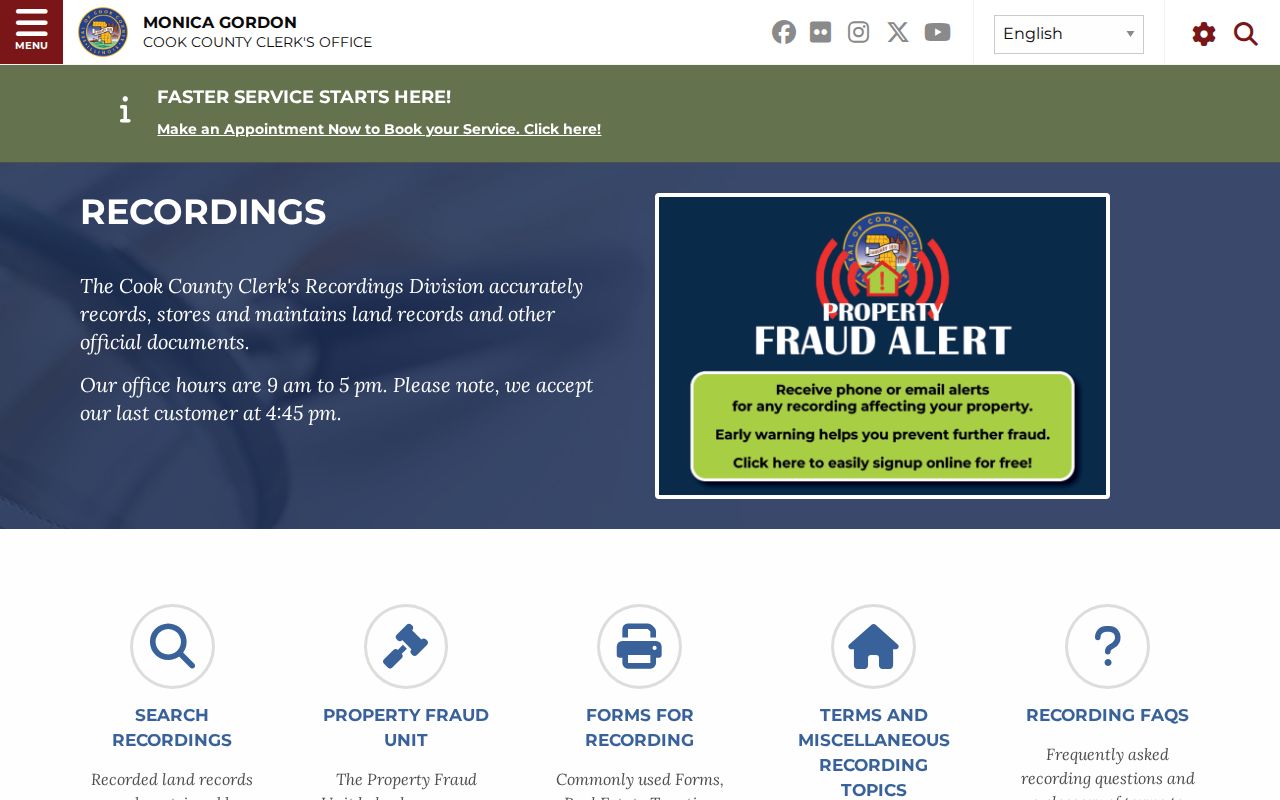
This route remains useful when an older instrument or certified copy cannot be reached through the web index.
The Cook County recording portal is the online entry point for recorded parties and instruments.
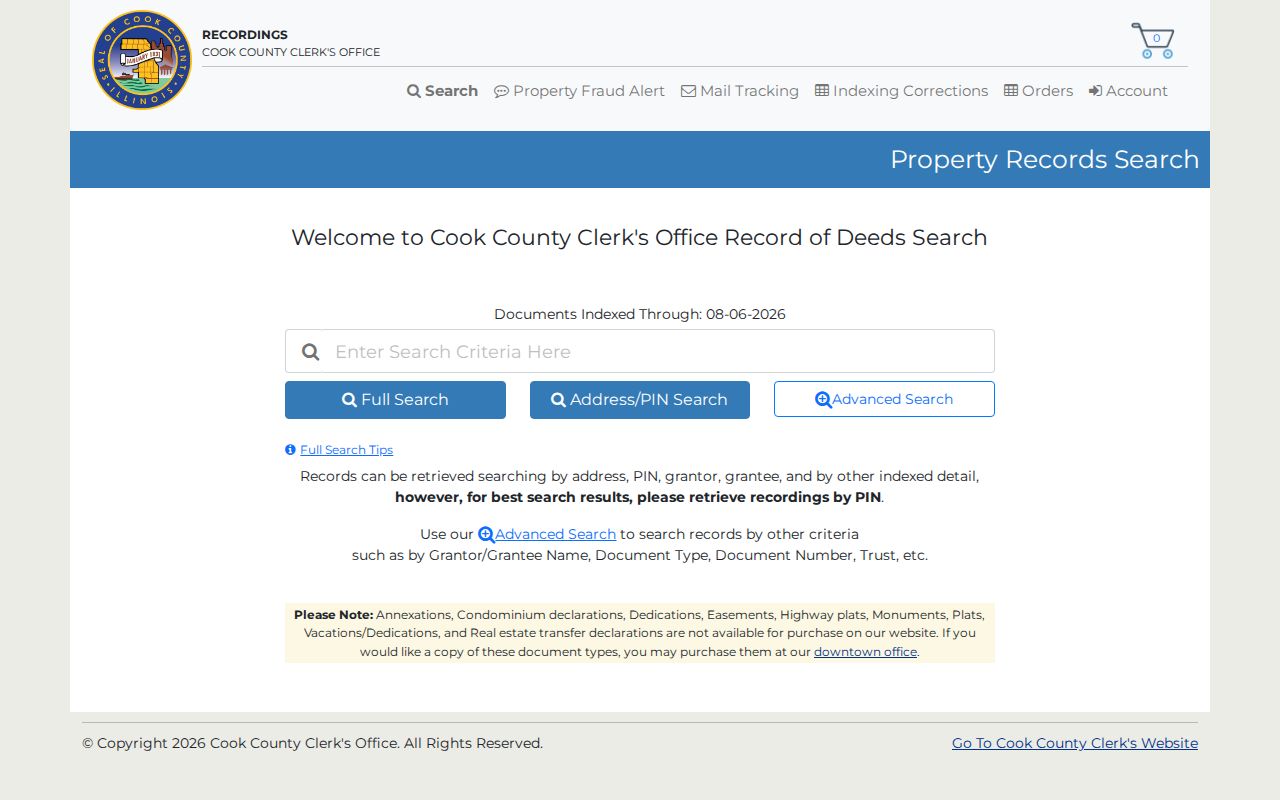
The image documents access, not a verified beginning year. Supply a PIN, legal description, known owner, date range, and document type when requesting an offline search.
Pair Niles Directories and Census
Owners are only part of an address story. The library's 1999 inventory records Cook County north-suburbs directories, Haines volumes, and Chicago-area telephone books, though no exact year run is online. Ask staff to check an address in each edition and note the title, year, page, and whether the line is a home, business, or advertisement. The full shelf context belongs on the Niles city directory page.
- Normalize the number, direction, unit, street name, and possible postal city.
- Read the latest available address-to-name volume, then move backward one issue at a time.
- Pair a directory year with the closest public federal census schedule.
- Compare occupants with the parcel owner and deed date rather than assuming they match.
- Use newspapers, probate, yearbooks, or cemetery records to explain a last appearance.
Federal schedules through 1950 are public under the 72-year rule. Most 1890 schedules were destroyed, so directories, deeds, tax material, newspapers, and church records must bridge that gap. A township census address may also fall outside today's Village boundary.
Niles Resident Address Clues
A 1987 Niles Bugle article describes a local telephone-directory tradition reaching to 1909, when the area was called Niles Center. That article does not prove a 1909 volume survives. It explains why a search under only the modern place name can miss a historical line.
There is no verified Village-wide street-renumbering year. Bridge a mismatch with the PIN, lot, block, subdivision, and legal description. Search the street without its suffix, then compare the official Village street and neighborhood maps. Niles Center, a postal city, Niles Township, and the modern Village are distinct location labels.
Note: Keep the original wording beside the normalized address, since changing it silently can break the next search.
Niles Previous Residents in Permits
Deeds date legal transfers, while permits date physical work. The Niles permit form can contain the property address, owner, applicant, contractor, work type, cost, trade information, signatures, and dates. Ask Niles Community Development for existing records by address and a bounded year range. The portal does not state its first digitized year, so older files may require a Village FOIA request.
Do not substitute a generic fire-insurance map for local proof. The Library of Congress search did not verify a Niles-specific Sanborn sheet or year. The library's 1990 zoning map and 1981 Neighborhood Analysis can add land-use context, but they are not Sanborn maps and do not identify previous residents.
Niles Resident History Help
The Niles Historical Society research service accepts phone, email, visit, and some remote inquiries. Its local newspapers, 1968 Chamber directory, and 1994 St. Hedwig alumni directory can connect a name to a dated institution or event. The museum occupies a former 1923 county police-station building, moved in 1985 and opened as a museum in 1986.
Send staff the exact address, any earlier number, the rough period, known owners, and the subdivision if known. State whether the goal is occupants, ownership, permits, maps, or an obituary. That focused request gives staff a better route through microfilm and print than a broad surname query.
When Niles Online Records Stop
The recording portal's start year is not stated on the accessible public landing page. Do not turn the 2020 merger of the Recorder into a coverage date. If a deed cannot be found online, contact the Clerk with the PIN, subdivision, lot and block, known party, rough date, and instrument type. Ask whether the next source is a grantor-grantee book, deed book, microfilm reel, mail copy, or in-person search.
The Cook County IRAD holdings page is the next historical catalog for county, township, court, land, tax, election, vital, naturalization, and probate material. Search the State Archives Local Government Holdings system with both Niles and Niles Township terms. An archive catalog describes record groups; it does not mean every image is online.
Keep a search log when tracing previous residents. Record the portal or office, query spelling, date range, result, and access date. A blank web result may reflect an index cutoff, name variant, parcel split, trust name, missing image, or the wrong jurisdiction. It is not proof that a transfer never occurred.
For a certified copy, follow the Clerk's current request and fee instructions. A downloaded index line can guide research, but the custodian's certified record is the authoritative copy when formal proof is required.
Close a Niles Household Trail
When a name vanishes, search the library's Niles Bugle, Herald-Spectator, and Journal products for obituaries, anniversaries, school notes, civic work, and business moves. A probate file can identify an estate, executor, heirs, and dated addresses. The official St. Adalbert locator can confirm cemetery evidence under its personal-use terms, but burial does not prove where the person last lived.
Keep a source-date worksheet for each prior owner or occupant. A parcel card, deed, directory entry, census row, permit, obituary, and alumni listing are separate observations. Agreement makes the previous residents trail stronger. Disagreement is not a reason to merge identities. Check spelling, dates, boundaries, and record roles.
Lawful use. Research previous residents for house history, family history, estate work, or personal curiosity. Never use an old address trail to follow, harass, or harm a living person.