
Niles Resident Records Compared
No single roll proves that a person lives in Niles now. Each official source confirms a limited fact and has its own access rule. Begin with the fact already known, such as an address, birth date, case type, license, or business name. The table keeps those questions separate.
| Record | What It Confirms | Where | Access |
|---|---|---|---|
| Property card | Parcel owner, taxpayer, situs and mailing fields | Cook County Assessor | Free address or PIN search; no owner-name input |
| Voter lookup | Registration result for supplied name, birth date and ZIP | Illinois voter lookup | Limited result under 10 ILCS 5/1A-25 |
| Court docket | Party, case number, type, dates and status | Cook County case search | Public docket data; copies may cost |
| Vital record | Birth, death or marriage event | Cook County Clerk | Eligibility and copy rules apply |
| Professional license | Credential, status, city, ZIP and discipline | IDFPR License Lookup | Free; no home contact fields |
| Unclaimed property | Historical city or ZIP tied to reported property | Illinois I-Cash | Free; not proof of current residence |
A Niles resident lookup is strongest where two independent records meet. An Assessor result may establish ownership, but not the full household. A docket establishes that a named party appears in a case, not where that party now lives. Vital records may establish a family event, yet ordinary certified copies can require identification or a qualifying interest.
Matching Niles Names Carefully
Cook County produces long candidate lists for common surnames. Keep middle initials, suffixes, maiden names, translated first names, and Polish, German, or Central European spelling variants distinct. A registered agent can appear in a business filing without being a Niles resident. A deed can name a trustee, spouse, or attorney. Treat each role as part of the record, not as proof of residence.
Build an intersection: full name plus an address or ZIP, then add a date, parcel PIN, school, parent, spouse, license type, or organization. Conflicting facts mean the match is not settled. For historic classmates, the Niles city directory collections, local newspapers, and digitized yearbooks may supply the missing school or year before modern records are checked.
Same-name safeguard. Save the source date and the role shown beside every candidate; never merge two people merely because their names match.
Niles Court Name Lookup
The Circuit Court of Cook County portal is the main local court-name route. Its Odyssey public guide documents party first, middle, and last names, business name, case number, filing-date range, case type, and location filters. Use a broad name first, then narrow by the Skokie suburban district, date, or case type when the result set is large. The system caps broad result lists, so a narrower date range can reveal a candidate hidden by that limit.
| Result field | How it helps |
|---|---|
| Case number and location | Separates court divisions and identifies the file to request. |
| Party and party type | Shows the name and role in that case. |
| Case type and status | Prevents unrelated matters from being blended. |
| Filed and disposition dates | Places the record in time. |
| Events and documents | Lists docket activity; the index may not include the image. |
When an online docket is incomplete, use a courthouse public-access terminal or submit the court document request. Older probate, naturalization, law, chancery, and divorce files have division-specific archive windows. The request form asks for the case number, party names, division, document, year, and delivery choice. Federal matters use PACER through the Northern District of Illinois, not the Cook County portal.
Search results can lag the court file, and an event label may make little sense without the document behind it. Write down the complete case number before contacting the clerk. That number is a safer key than a name because it routes the request to the proper division and year. If a result appears wrong, ask the Clerk of the Circuit Court about its correction process rather than changing a separate source to make the records agree.
Verify One Niles Resident
Verification should move from the least invasive local fact to a second, independent index. Do not force a name into every database. Choose records that fit the person’s real connection to Niles.
- Write the name exactly as supplied, including the middle name and suffix. List known variants without merging them.
- If an address is known, search the Cook County Assessor by street and compare the situs, owner-mailing field, and 14-digit PIN.
- Check a relevant second source. Use the court party search for a known case, IDFPR for a professional credential, or the state business search for a public company role.
- Compare dates, ZIP, organization, relatives, and record roles. If an official copy is needed, request it from the custodian rather than relying on the index.
- Docket
- The court’s dated list of filings and events in one case.
- Index versus image
- An index points to a record and lists key facts; an image is the document itself.
- Certified copy
- A copy authenticated by the office that holds the original record.
- PIN
- The 14-digit property index number used to identify a Cook County parcel.
Note: A taxpayer mailing address and a parcel’s physical situs can differ, so record both instead of choosing the more convenient one.
Confirming Niles Public Roles
Official role searches help distinguish people who share a name. The Illinois Secretary of State business database can show an entity name, formation or registration date, jurisdiction, status, registered office, registered agent, and officers or managers. Those are company roles. They do not create a household directory.
The IDFPR database can be searched by name, license number, profession, or license type. A result typically includes the license number and type, status, first and current effective dates, expiration, city, state, ZIP, and public discipline. IDFPR excludes a home address, email, and phone. Since the state calls the live database a primary source and updates it daily, note the date viewed.
The official IDFPR screen shows why a Niles resident lookup should focus on the specific fact the state publishes.
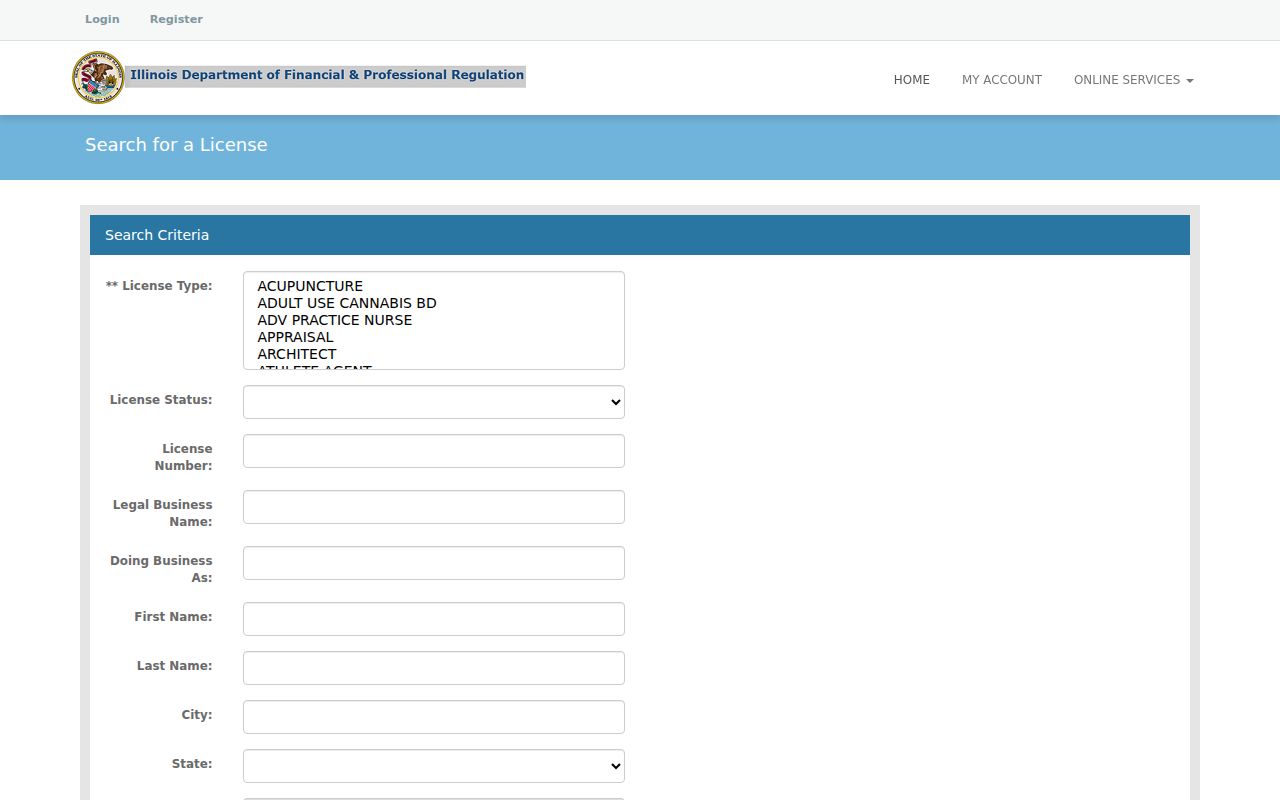
The search fields support credential verification while leaving personal home contact details outside the public result.
Niles Family Record Paths
Birth, marriage, and death records can confirm a family relationship, but access depends on the event and age of the record. Cook County genealogy rules open births after 75 years, marriages after 50 years, and deaths after 20 years. The genealogy form is for non-certified research copies and asks for the event name, date, Cook County place, relationship, and requester contact details. Current certified copies follow stricter identity and eligibility rules.
For an heir search, begin with a probate docket and obituary, then use a vital record only when eligibility is met. IDPH directs older work to county offices, the Illinois State Archives, or IRAD. Vital records are not obtained by filing FOIA with IDPH. A birth-parent search should follow the official Illinois adoption and vital-record process, not an open resident list.
The Cook County genealogy request form accepts a Cook County city, town, or village for the event place. Its birth section also asks for the mother’s name and optionally the father’s name. Marriage requests use the bride’s maiden name and groom’s name. Death requests use the name at death. Those fields can separate two Niles families far better than a broad surname search.
Niles Custody Status Checks
Custody databases answer a narrow status question and should never be treated as general resident directories. The Cook County Sheriff locator supports a name search and a booking-ID route for people held in the county system.
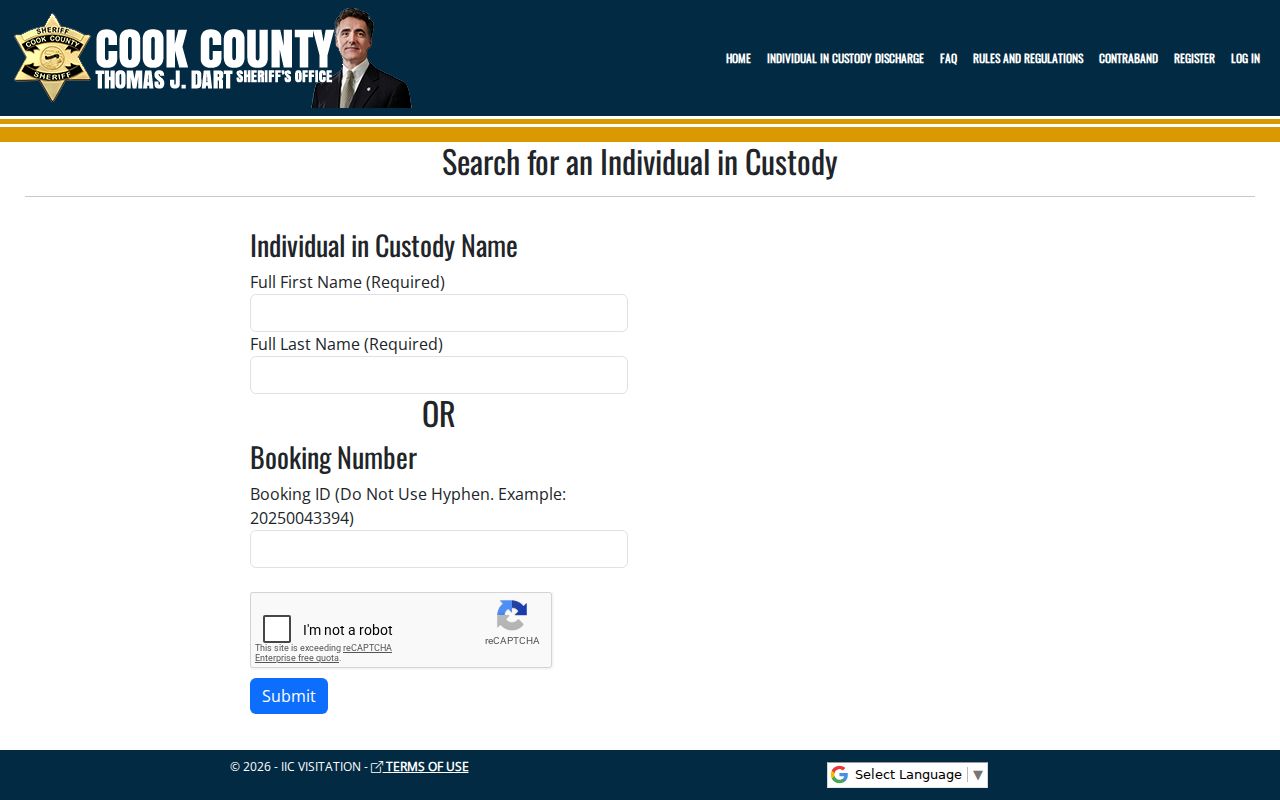
A result reflects custody data, not a current Niles home. Match the booking identifier and other published details before deciding that a same-name result belongs to the person sought.
For the state system, the Illinois Department of Corrections inmate search is the official route.
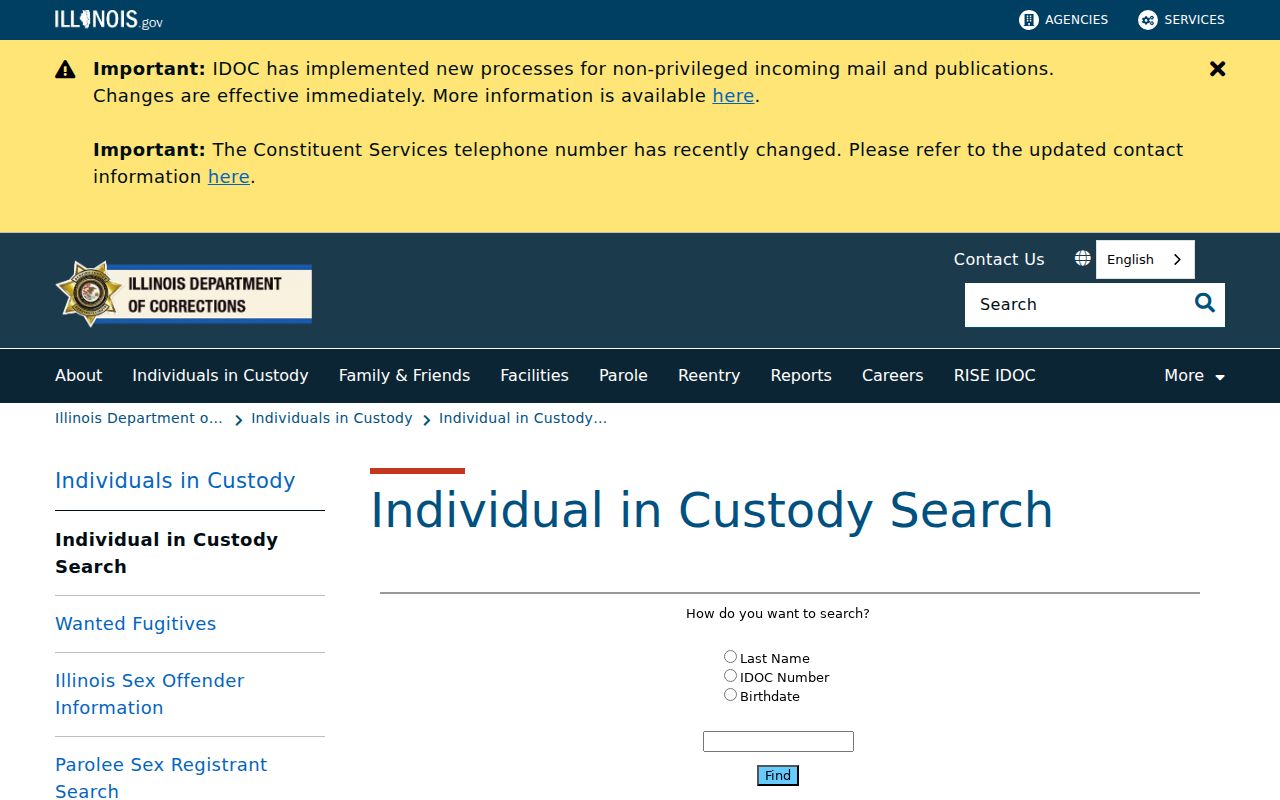
IDOC publishes public custody information with its own notices and maintenance limits. Use Illinois VINE for custody notifications, not repeated manual searches or attempts to locate a private address.
Niles Connections in I-Cash
The Illinois Treasurer’s I-Cash search offers a useful historical lead for relatives, heirs, or a person tracing their own property. Last or business name and first name are required. City, ZIP code, and property ID are optional filters. A preview may show owner name, address, city, state, ZIP, reporting organization, amount, relationship, property ID, property type, and year reported.
The I-Cash claim search is free and updated weekly. Claimants select property, state their relationship, and submit supporting documents online or by mail. Processing may take up to 12 weeks, and no claim deadline is stated. Its address is a report clue, not a current home address.
The captured state page illustrates the name, city, and ZIP route used to narrow a Niles match.
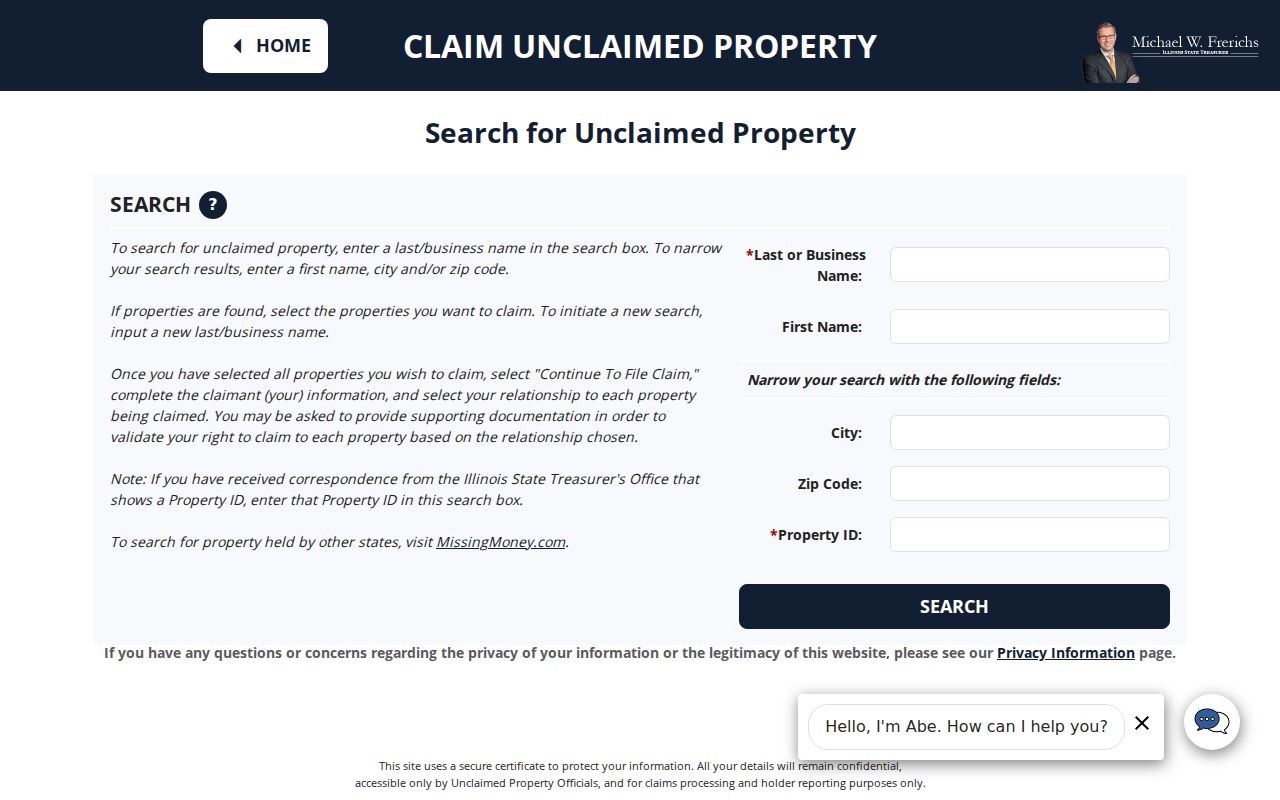
Use the returned reporting year and organization as cross-checks before treating two similar names as the same owner.
Niles Resident Lookup Limits
Some missing results are deliberate. Illinois voter data is limited by 10 ILCS 5/1A-25, and a lookup does not disclose ballot choices. Sealed and expunged cases, juvenile matters, protected vital records, sensitive law-enforcement fields, and personal contact details may be withheld. The Illinois Address Confidentiality Program gives eligible survivors a substitute address and shields an actual address under the Address Confidentiality Act.
Correct an error with the office that created the record. For a Village record not otherwise available, Niles accepts requests through NextRequest under the Illinois Freedom of Information Act, 5 ILCS 140. Ask for an existing record with a date range and record type. FOIA does not override a confidentiality law or require staff to create a new resident profile.
Lawful personal use. Use a Niles resident lookup for legitimate research, reconnection, or record correction. Never use public details to stalk, harass, intimidate, or harm anyone.